Milwaukee Art Museum Presents First Major Retrospective of Hoocąk (Ho-Chunk) Artist Truman Lowe
Water’s Edge: The Art of Truman Lowe brings nearly 50 works by the influential Wisconsin-born artist to Milwaukee this April.
MILWAUKEE, Wis.,— Oct 19, 2026—The Milwaukee Art Museum will present Water’s Edge: The Art of Truman Lowe, the first major retrospective of the acclaimed Hoocąk (Ho-Chunk) artist Truman Lowe (1944–2019), from April 9 through Aug. 1, 2027. Organized by the Smithsonian’s National Museum of the American Indian, the exhibition brings together nearly 50 sculptures, drawings, and paintings spanning Lowe’s career, including rarely seen monumental works and significant loans from public and private collections.
Following its presentation in Washington D.C., Water’s Edge comes to Wisconsin, where Lowe was born, educated, and taught for decades and where the waterways, woodlands, family experiences, and Hoocąk cultural knowledge that informed his work were part of his everyday life. Born near Black River Falls, Lowe spent his formative years along the Black River before studying at the University of Wisconsin–La Crosse and the University of Wisconsin–Madison. He went on to teach sculpture at UW–Madison for 35 years, mentoring generations of artists.
“Truman Lowe was an extraordinary artist whose influence reaches far beyond Wisconsin, but its landscape remained fundamental to the way he saw and made art,” said Kim Sajet, Donna and Donald Baumgartner Director of the Milwaukee Art Museum. “Bringing his first major retrospective to Wisconsin gives our audiences the opportunity to experience the full scope of his achievement in close relationship to the waterways, woodlands, and cultural knowledge that shaped his work.”
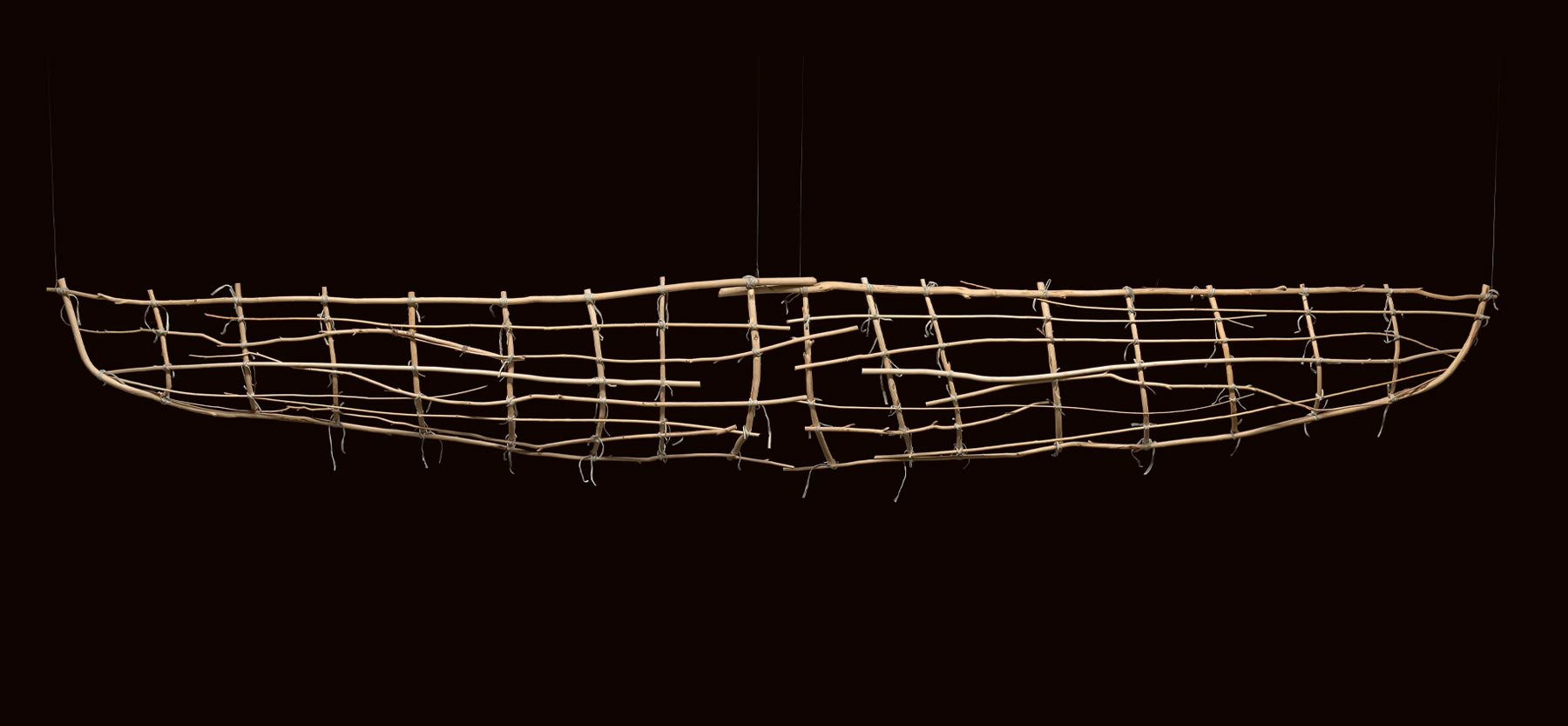
Known for elegant, minimalist sculpture, Lowe transformed willow saplings, wood, feathers, stone, and other materials into remarkably fluid forms. Waterfalls seem to cascade from solid wood; slender branches suggest streams, canoes, and Woodland structures. Across media, Lowe combined abstraction and recognizable form while drawing from Hoocąk cultural knowledge, family memories and creative practices, and his lifelong experiences of Wisconsin’s landscape.
The exhibition is organized around four key themes Lowe returned to throughout his career: Moving Water, Woodland Structures, Memory and Knowledge, and Landscape and Place. Together, these themes illuminate the connections among Lowe’s formal experimentation, his relationship to place, knowledge passed through his family, and generations of Hoocąk presence in Wisconsin.
“Lowe had an extraordinary ability to make familiar materials behave in unexpected ways,” said Margaret Andera, senior curator of contemporary art at the Milwaukee Art Museum and hosting curator of the Milwaukee presentation. “Wood seems to flow like water, and an arrangement of willow can evoke the structure of a canoe or the movement of a stream. As visitors move through the exhibition, those formal innovations open onto a much larger story about family, memory, Hoocąk cultural knowledge, and Lowe’s enduring relationship with place.”
Lowe’s influence extended beyond his own studio. In addition to his decades as an educator and mentor, he served from 2000 to 2008 as the founding curator of contemporary art at the National Museum of the American Indian. There, he significantly expanded the museum’s contemporary art collection and helped create greater visibility for contemporary Indigenous artists. Today, NMAI holds 40 works by Lowe, making the institution an important steward of the artist’s work and legacy.
The Milwaukee Art Museum also has a longstanding relationship with Lowe’s work and has collected his art since the 1990s. Among the works from the Museum’s collection featured in Water’s Edge is his Inni-chi-ru-he (Stone Wall) (1995), a monumental installation of chalk on paper and willow branches that stretches 23 feet across. Acquired by the Museum in 1997, the work is rarely exhibited because of its scale and fragility, making its inclusion in the retrospective a rare opportunity to experience one of Lowe’s major works from the Museum’s collection.
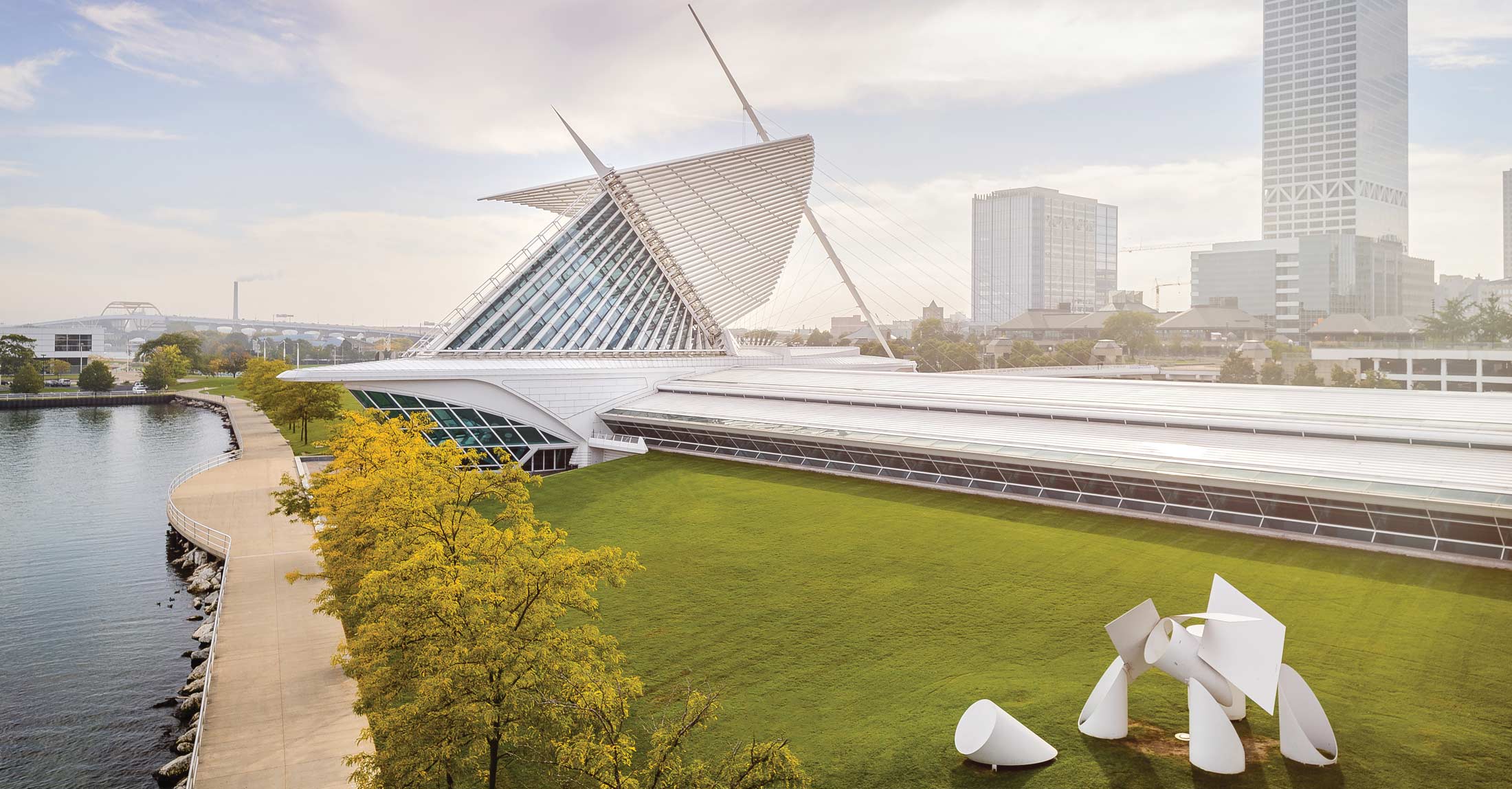
Notably, the Milwaukee presentation will be shown beside Lake Michigan, placing Lowe’s sustained exploration of water, landscape, memory, and place in direct relationship with the environment beyond the galleries. Visitors leaving the exhibition will encounter an expansive view of the lake, extending one of Lowe’s most enduring subjects beyond the Museum walls.
The Milwaukee Art Museum continues collaborating with its Native Initiatives Advisory Group and community partners, including the Ho-Chunk Nation Museum and Cultural Center, Native American Tourism of Wisconsin (NATOW), and HIR Wellness Institute, to inform programming and partnerships surrounding the exhibition and to create opportunities for Hoocąk and Indigenous artists, cultural leaders, scholars, and community members to contribute perspectives to the exhibition experience.
A companion catalogue published in conjunction with the exhibition expands on Lowe’s life, work, and influence through scholarly essays and reflections from fellow artists. Featuring more than 100 images, including lesser-known drawings and photographs of Lowe’s family and studio, the publication offers new perspectives on his artistic practice and his impact as an artist, educator, curator, and mentor.
Water’s Edge: The Art of Truman Lowe was organized by the Smithsonian’s National Museum of the American Indian and curated by Assistant Curator of Contemporary Art Rebecca Head Trautmann. Leading support provided by Bank of America. Major support provided by the Henry Luce Foundation. Generous support provided by the Terra Foundation for American Art and Ameriprise Financial. Additional support provided by John Lavine and Meryl Lipton Lavine and Leslie A. Wheelock.
To learn more, visit mam.org/waters-edge.
About Truman Lowe
As an artist, museum curator, university educator and mentor, Lowe influenced generations of emerging artists, scholars, and curators. He left an enduring legacy to the fields of American and Native North American art. An internationally exhibited artist, Lowe also taught sculpture for 35 years at the University of Wisconsin–Madison and was the founding curator of contemporary art at the National Museum of the American Indian. While there, he significantly expanded the museum’s contemporary art collection. In 2022, the University of Wisconsin–La Crosse, his undergraduate alma mater, dedicated the Truman T. Lowe Center for the Arts, which houses the school of visual and performing arts.
Support
Leadership sponsor
Milwaukee Art Museum’s Friends of Art
Contributing sponsors
Thomas Hesselbrock and Carl Spatz
Media sponsor
Milwaukee Journal Sentinel
The Milwaukee Art Museum extends its sincere thanks to the Visionaries for their support of the exhibition program.
Debbie and Mark Attanasio
Donna and Donald Baumgartner
Murph Burke
Bill and Sandy Haack
Chris Harned and Elizabeth Quadracci Harned
The Helmerich Trust
Kenneth and Alice Kayser
Joan Lubar and John Crouch
Jeff and Gail Yabuki
Visit
Water’s Edge: The Art of Truman Lowe is on view April 9–August 1, 2027, in the Baker/Rowland Galleries.
Programming
April 8: Member Opening
April 9: Curator-led Gallery Talk
April 29: Expert Series
May 2: Studio Sunday
May 8: Slow Art Saturday
May 12: Present Music Concert
May 27: Curator-led Gallery Talk
May 28: Curator-led Gallery Talk
June 10: Curator-led Gallery Talk
Admission
Adults: $27
Students, seniors (65+), military: $20
Kids 12 and under: Always free, thanks to an anonymous donor
Wisconsin K–12 teachers: Free with valid school ID or pay stub
Members: Free
Thursday Nights at MAM
Every Thursday, admission is pay-what-you-wish from 4 to 8 p.m.
Visiting with kids
Families can explore and create together with free gallery activities, including ArtPacks, SketchPacks, and opportunities to make art in the Art Studio.
Membership
Members enjoy free admission, exclusive programs, and special access throughout the year. Learn more at mam.org/membership.
Experience the Burke Brise Soleil
Designed by Santiago Calatrava, the Museum’s iconic wings open daily with the Museum, close and reopen at noon, and close at 10 p.m. The wings are illuminated nightly from sundown to 10 p.m.; movement is weather permitting.
About the Milwaukee Art Museum
The Milwaukee Art Museum is an essential destination for art and architecture and a vital cultural resource that connects visitors to dynamic art experiences and one another. Housed in iconic buildings by Santiago Calatrava, Eero Saarinen, and David Kahler on a 24-acre lakefront campus, the Museum is Wisconsin’s largest art institution and home to both broad and deep collections, with exceptional holdings in American painting, sculpture, and decorative arts; conceptual and minimalist art; prints and drawings; European art from the Renaissance through the nineteenth century; photography and new media; modern and contemporary design; folk and self-taught art; and twentieth-century Haitian art. A bold symbol of Milwaukee’s ambition and forward-thinking vision, the Museum is a place for community building, education, and celebration that fosters creativity, free speech, and critical discourse for audiences of all ages and backgrounds. For more information, visit mam.org.
Media Contact
For more information or to request hi-res images, please contact:
Cortney Heimerl
Milwaukee Art Museum
communications@mam.org
414-940-0490
